

- Compact form factor of 21 mm × 51 mm.
- RP2040 microcontroller chip designed by Raspberry Pi in the UK.
- Features a dual-core Arm Cortex-M0+ processor, clocked up to 133 MHz.
- Offers 264kB of on-chip SRAM for efficient processing.
- Equipped with 2MB of on-board QSPI flash memory.
- Raspberry Pi Pico W and WH models include 2.4GHz 802.11n wireless LAN and Bluetooth 5.2.
- Provides 26 multifunction GPIO pins, including 3 analog inputs for versatile connectivity.
- Supports 2 UART, 2 SPI, and 2 I2C controllers, along with 16 PWM channels for diverse interfacing.
- Includes 1 USB 1.1 controller and PHY, supporting both host and device functionality.
- Offers various features like low-power sleep modes, accurate on-chip clock, temperature sensor, and accelerated libraries for integer and floating-point operations.
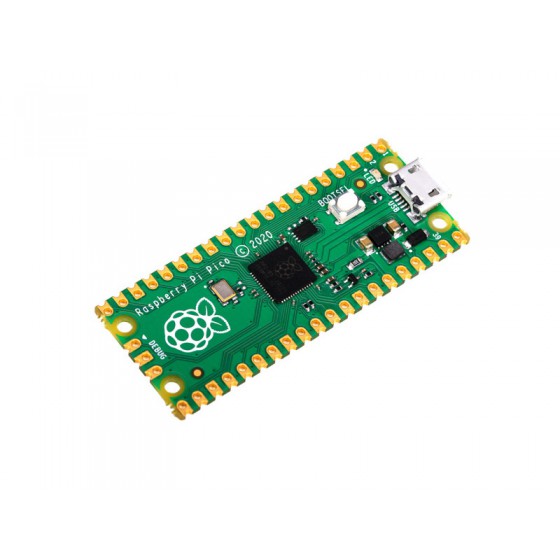
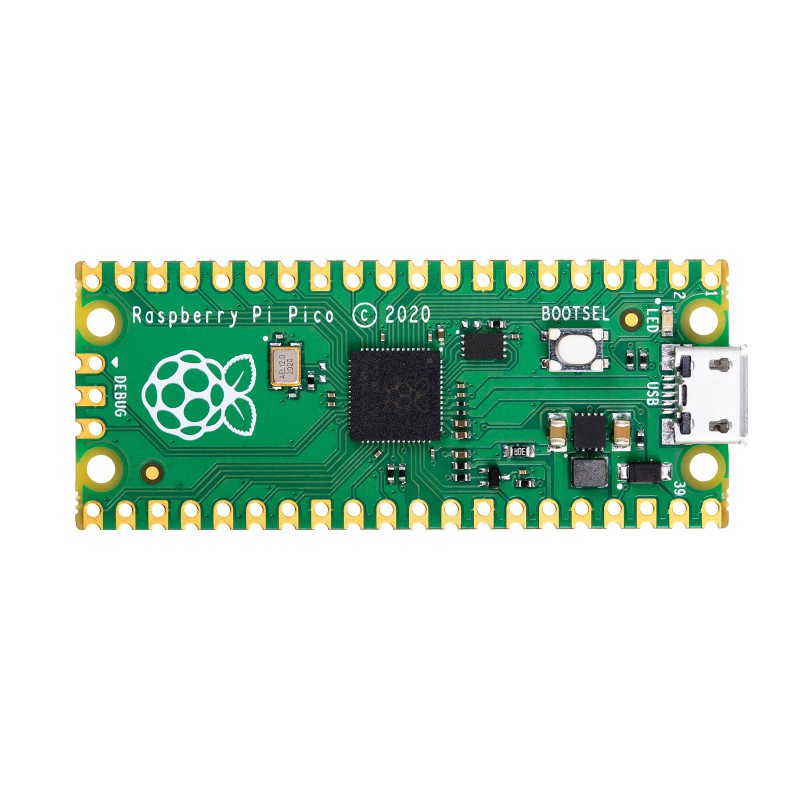
Raspberry Pi Pico
₨ 1,078.00
Introducing Raspberry Pi Pico: A high-performance microcontroller board with RP2040 chip. It features flexible voltage input, extensive IO pins, and easy reprogramming via USB or SWD port. Ideal for diverse DIY projects with soldered or surface-mount applications.


Reviews
There are no reviews yet.